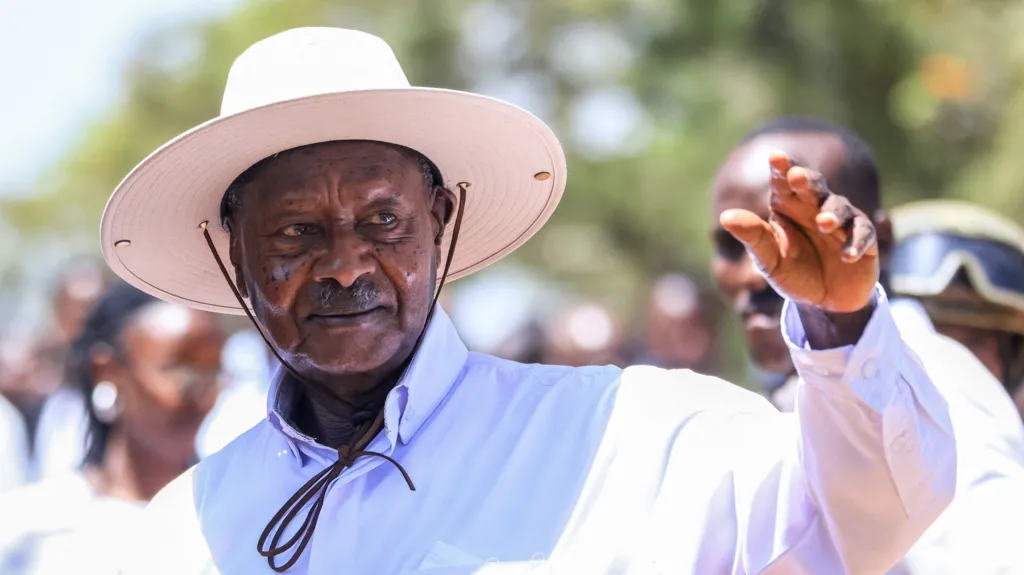
Kampala, Uganda: Uganda’s political landscape has entered a new chapter after Yoweri Museveni was declared the winner of a highly contested presidential election, extending his rule to nearly four decades in power. The announcement by the electoral commission confirmed that Museveni secured a decisive majority, paving the way for another five-year term at the helm of the East African nation.
The Uganda election outcome has immediately drawn sharp reactions from the opposition and civil society groups. Museveni, now 81, first took power in 1986 after leading a guerrilla war that ended years of political instability. Since then, he has dominated the country’s political system, winning multiple elections and positioning himself as a central figure in Uganda’s post-independence history.
According to official results, Museveni garnered 72 percent of the vote, while his closest rival, Bobi Wine, received 25 percent. Wine, a former pop star turned politician, has rejected the results, describing them as fraudulent and urging supporters to remain calm while demanding accountability through peaceful means.
The election period was marked by tension, allegations of violence, and heightened security measures across several regions. Opposition figures claim that dozens of people lost their lives during the campaign and immediate aftermath, although authorities have confirmed fewer fatalities. Independent verification has proven difficult due to restrictions on movement and communication in parts of the country.
One of the most controversial aspects of the Uganda election was the nationwide internet shutdown imposed days before voting. Government officials defended the move as necessary to prevent the spread of misinformation and to safeguard national security. However, the blackout attracted strong criticism from international observers and rights organizations, who warned that it undermined transparency and limited citizens’ access to information during a critical democratic process.
The opposition also raised concerns over the treatment of its supporters. Reports of disrupted rallies, arrests, and the heavy presence of security forces dominated the campaign trail. Police officials dismissed these claims, arguing that law enforcement actions were aimed at preventing unrest and maintaining public order in areas deemed sensitive.
In the days following the vote, uncertainty deepened when opposition representatives alleged that Wine had been placed under house arrest. Police denied this characterization, stating instead that access to his residence was restricted due to security considerations. Wine later stated that he had evaded a night-time security operation and was temporarily in hiding, further intensifying political tensions in the capital.
Despite the controversy, Museveni’s supporters argue that his continued leadership offers stability in a country with a turbulent past. During the campaign, the president emphasized economic growth, infrastructure development, and regional security, presenting himself as the only leader capable of safeguarding Uganda’s progress.
By contrast, Wine positioned himself as the voice of a younger generation. With a majority of Ugandans under the age of 30, his campaign focused on corruption, unemployment, and democratic reform. He repeatedly called for institutional change and greater political freedoms, themes that resonated strongly with urban youth voters.
The final turnout stood at just over 52 percent, reflecting both voter engagement and lingering fears surrounding the election environment. Six other candidates participated, but none managed to secure a significant share of the vote, reinforcing the dominance of the two main contenders.
As Uganda absorbs the implications of the election results, attention is turning to what the next term will bring. Calls for dialogue, the restoration of full internet access, and independent reviews of the electoral process continue to grow. The Uganda election has not only extended Museveni’s long rule but has also reignited national and international debate about governance, democracy, and the future direction of the country.