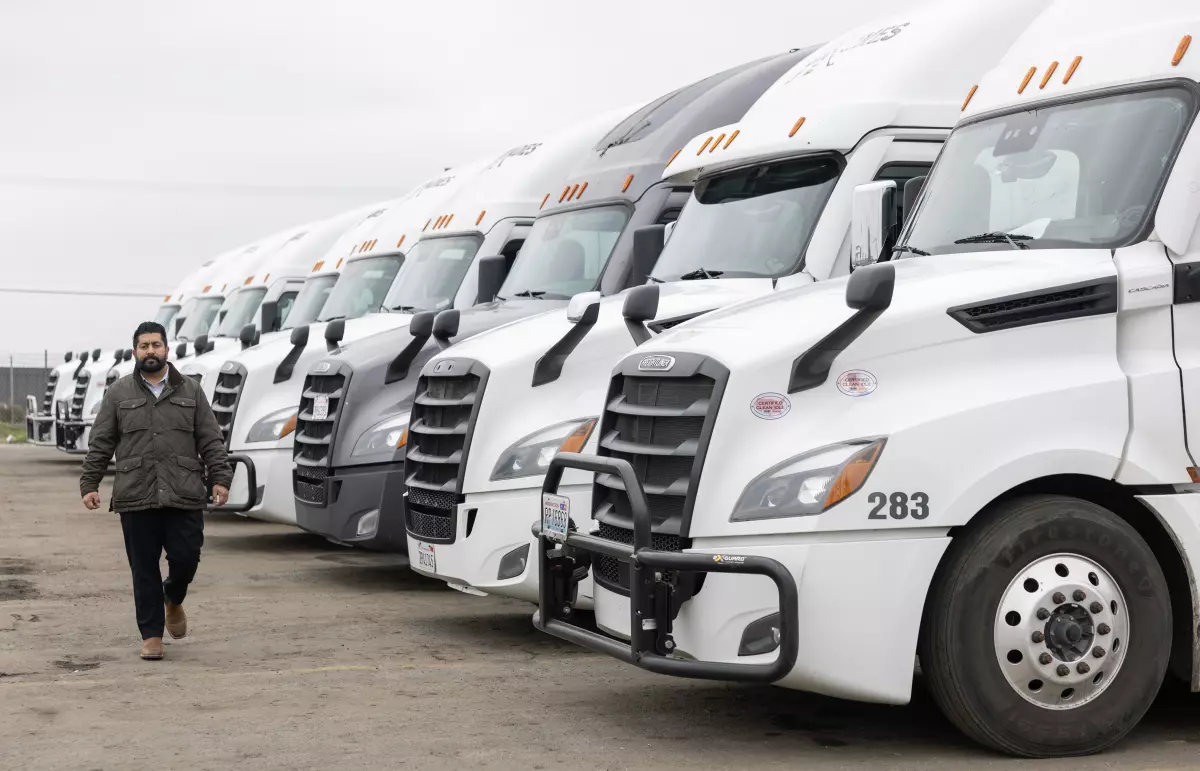
Migrant trucker licenses have become the centre of a fresh political and legal standoff after California moved to delay the cancellation of thousands of commercial driving permits. On Tuesday, the state’s Department of Motor Vehicles announced a 60-day extension for around 17,000 migrant truck drivers whose licenses were due to be revoked. The decision allows affected drivers to continue working while they retake tests or complete steps needed to remain compliant.
State officials framed the move as an economic necessity. DMV Director Steve Gordon said commercial drivers play a vital role in supply chains and community connectivity. By extending the deadline, California aims to avoid sudden disruptions while addressing compliance concerns. The extension means licenses set to expire on January 5 can now remain valid until March 6.
Why migrant trucker licenses sparked a federal clash
The decision immediately drew a sharp response from Washington. U.S. Transportation Secretary Sean Duffy warned that California risks losing up to $160 million in federal funding if it fails to meet the January 5 deadline to revoke unvetted foreign trucker licenses. He said the state does not have authority to extend what he described as unlawful practices.
Duffy had already withheld $40 million in federal funds earlier, citing California’s failure to enforce English proficiency requirements for commercial drivers. Federal officials argue the measures aim to protect road safety and ensure uniform enforcement across states. California, however, says the extension provides due process and prevents economic harm.
Legal pressure behind the extension
The DMV’s move followed legal action from civil rights groups. The Sikh Coalition and the Asian Law Caucus filed a class-action lawsuit alleging that the DMV failed to provide proper recourse for affected drivers. The lawsuit claims the agency refused renewals, denied new licenses, and violated drivers’ rights.
The extension offers temporary relief to those drivers while the legal challenge proceeds. For many, it provides time to prepare for retesting or resolve documentation issues. Community leaders described the decision as a modest but meaningful step toward fairness.
Read Also
California business highlights this week
In-N-Out expansion targets a new market
Impact on migrant communities and trucking hubs
Bakersfield, a major trucking hub in California’s Central Valley, sits at the heart of the issue. The city hosts a large Punjabi Sikh population, many of whom work in trucking. Vice Mayor Manpreet Kaur said the community felt relief after the announcement. She added that drivers have become collateral damage in a broader political dispute between state and federal authorities.
Punjabi Sikhs form a critical part of the U.S. trucking workforce. Estimates suggest about 150,000 work in the industry, with most based on the West Coast. Community advocates argue that punishing drivers for administrative errors unfairly targets a group that underpins national logistics.
Safety concerns and federal scrutiny
Commercial licenses for non-American drivers became a national flash point in 2025 after an undocumented Punjabi trucker caused a fatal accident in Florida. That incident intensified scrutiny of licensing practices nationwide. A subsequent federal audit found that many licenses extended beyond the duration of drivers’ legal stays in the United States.
Critics of the revocations say drivers should not suffer for DMV clerical failures. Supporters of stricter enforcement argue that proper vetting and language proficiency remain essential for public safety. The debate now pits enforcement priorities against economic and civil rights concerns.
Industry views and screening questions
Trucking trade groups once warned of severe driver shortages and welcomed immigrant drivers. However, a freight recession has eased shortages, and some associations now support tighter enforcement. They argue that removing unqualified drivers improves safety and industry standards.
Legal experts say the extension could allow more thorough screening. This may include verifying immigration status, confirming qualifications, and documenting compliance. Such steps could restore public confidence if handled transparently.
What comes next for migrant trucker licenses
Another legal issue may emerge as drivers reapply. Some attorneys question whether reapplying under new rules could weaken lawsuits over improper revocations. Others argue drivers have little choice but to comply to regain their livelihoods.
Ultimately, courts may need to resolve these questions. For now, the 60-day extension delays a final outcome while tensions between California and Washington continue. The outcome could shape how states balance federal rules, economic needs, and migrant worker protections in the trucking industry.