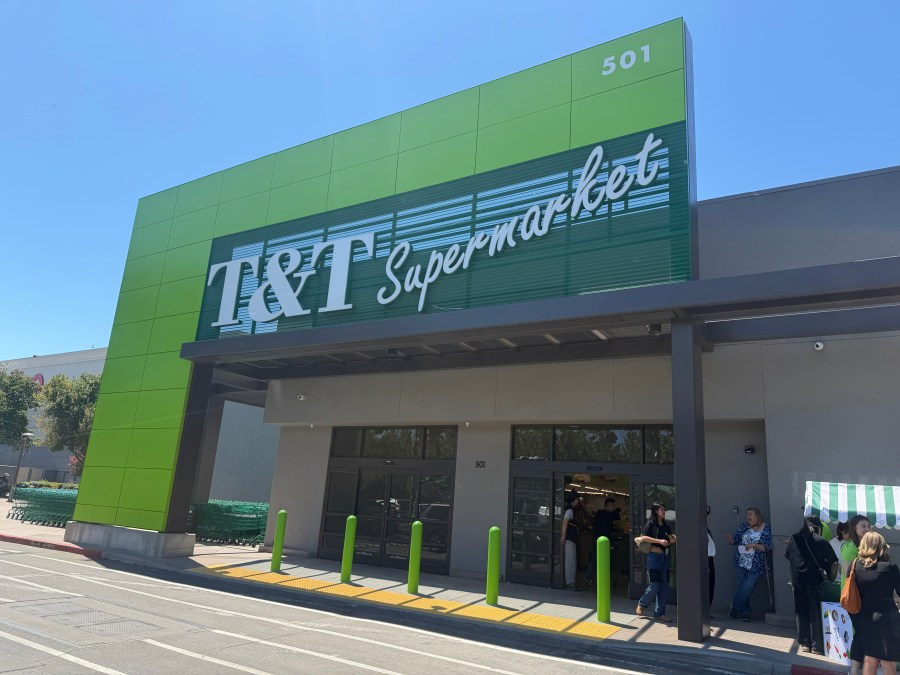
T&T Supermarket has officially opened its first California location in San Jose, marking a major step in the Canadian Asian grocery chain’s fast-growing expansion across the United States.
The new store is located at Westgate Center, 1600 Saratoga Avenue, in a space that gives the retailer a major foothold in Silicon Valley. The opening brings T&T’s mix of fresh produce, seafood, Asian pantry goods, prepared meals, bakery items, snacks, beauty products and household goods to one of the most diverse food markets in California.
The San Jose launch is more than a local grocery opening. It signals how strongly Asian supermarket chains are competing for customers in California, where demand for international food, ready-to-eat meals and specialty grocery experiences continues to grow.
T&T is already well known in Canada, where it has built a loyal customer base among Asian families, food lovers and shoppers looking for a broader grocery experience than a traditional supermarket. Its California debut gives the brand access to one of the largest Asian American consumer markets in the country.
The company is also planning more stores in California, including additional Bay Area and Southern California locations. That expansion could reshape competition among Asian grocers, especially as chains such as H Mart, 99 Ranch Market, Mitsuwa, Tokyo Central and other specialty retailers continue investing in the state.
Why the San Jose Opening Matters
The San Jose opening matters because it gives T&T a high-profile entry point into California.
San Jose is one of the best possible launch markets for an Asian supermarket chain. The city and wider South Bay have large Asian communities, a strong technology workforce, high household spending power and a deep food culture shaped by immigration and global tastes.
For T&T, opening in San Jose allows the company to reach Chinese, Vietnamese, Korean, Japanese, Filipino, South Asian and broader multicultural customer groups. It also gives the retailer access to shoppers who may not identify with one specific cuisine but are interested in Asian snacks, bakery items, prepared foods and fresh ingredients.
California is also a difficult grocery market. Competition is intense, real estate is expensive, labour costs are high and customers have many choices. T&T’s willingness to enter the market shows confidence in its brand and in the continued growth of Asian food retail.
Inside the San Jose T&T Store
The San Jose store is designed as more than a basic grocery outlet.
T&T stores are known for combining supermarket shopping with food-court-style convenience. Customers can shop for fresh ingredients, but they can also buy hot meals, roasted meats, dumplings, sushi, noodles, bakery items and desserts.
The store also carries imported snacks, sauces, frozen foods, rice, noodles, condiments, fresh produce, seafood, meats, tea, drinks, kitchenware and beauty items. This mix makes T&T attractive to several types of customers.
For families, it offers familiar ingredients and prepared dishes. For younger shoppers, it provides trendy snacks and ready-to-eat foods. For food enthusiasts, it gives access to products that may not be available in mainstream supermarkets.
This hybrid model is one reason T&T has developed a strong following. It is not only selling groceries. It is selling a food discovery experience.
T&T’s California Expansion Plans
The San Jose opening is only the beginning of T&T’s California strategy.
The company has announced or been linked to several additional California locations, including San Francisco, Millbrae, Irvine and Chino Hills. Local reporting has also identified Newark as part of the Bay Area expansion pipeline.
That planned footprint shows T&T is not treating California as a single-store experiment. It is building a regional network.
The Bay Area gives the company access to dense urban and suburban Asian communities. Southern California gives it access to another large and diverse customer base, especially in Orange County, the Inland Empire and Greater Los Angeles.
If these stores open as planned, T&T could quickly become one of the most visible Asian grocery brands in California.
Why Asian Supermarkets Are Growing in California
Asian supermarkets are expanding in California because customer demand has changed.
Shoppers are no longer looking only for conventional grocery aisles. Many want specialty ingredients, fresh prepared meals, international snacks, bakery counters, seafood departments and products connected to specific cuisines.
Asian supermarkets meet that demand by offering items that mainstream stores often carry only in limited quantities. They also serve immigrant families who want ingredients connected to home cooking and cultural traditions.
At the same time, younger and more diverse shoppers are more open to trying global foods. Social media has also helped introduce items such as mochi desserts, soup dumplings, Korean snacks, Japanese drinks, hot bars, bakery buns and Asian-style ready meals to wider audiences.
This gives chains like T&T a large potential customer base beyond one ethnic group.
Competition With H Mart, 99 Ranch and Other Grocers
T&T’s arrival increases competition in an already active Asian grocery market.
California already has strong regional and national Asian supermarket operators. 99 Ranch Market has long been a major player in Chinese and pan-Asian grocery retail. H Mart has expanded strongly in Korean and broader Asian grocery. Mitsuwa and Tokyo Central serve customers looking for Japanese products and food-hall experiences.
T&T enters this market with a different identity. It brings a Canadian brand, a strong prepared-food model, a broad product mix and a reputation for large-format stores.
The competition is likely to benefit consumers. More stores can mean more product variety, fresher prepared foods, better pricing pressure and more convenient locations.
For rival chains, T&T’s expansion may push them to improve store design, prepared foods, private-label products and customer experience.
Why San Jose Is a Strong Retail Market
San Jose is a strong retail market because it combines population density, income strength and cultural diversity.
The city sits at the centre of Silicon Valley and attracts workers, students, families and entrepreneurs from around the world. That creates demand for international grocery options.
The Westgate Center location also gives T&T access to an established shopping area with surrounding residential neighbourhoods and steady traffic. For a grocery chain, visibility and convenience matter. A supermarket can become part of weekly routines if customers can easily reach it.
San Jose also gives T&T a testing ground for California tastes. If the brand performs well there, it can use customer data, product feedback and staffing experience to improve future California locations.
What T&T Brings to California Shoppers
T&T brings several features that may appeal to California shoppers.
First, it offers a wide range of Asian groceries under one roof. Customers can buy ingredients for Chinese, Korean, Japanese, Vietnamese, Filipino, Thai and other cuisines in one store.
Second, it offers prepared foods. Busy families and workers can buy ready-to-eat meals instead of cooking everything from scratch.
Third, it offers bakery items and desserts. This is a major part of T&T’s appeal because many customers visit specifically for fresh baked goods.
Fourth, it offers private-label products. These can help the brand stand out from competitors because customers may not find the same items elsewhere.
Fifth, it creates a destination experience. A large Asian supermarket can attract shoppers from outside the immediate neighbourhood, especially during weekends and holidays.
The Rise of Grocery as Food Destination
T&T’s San Jose opening reflects a wider retail trend: supermarkets are becoming food destinations.
Traditional grocery stores focused mainly on ingredients. Newer food retail concepts combine ingredients, meals, snacks, bakery counters, hot food, specialty products and social media-friendly discoveries.
This is especially true in Asian grocery retail, where shoppers often expect live cooking stations, fresh seafood, roasted meats, dumplings, sushi counters, bakery cases and seasonal festival foods.
The result is a store that functions partly like a market and partly like a casual dining destination.
For shopping centres, this is valuable. A strong grocery anchor can bring regular foot traffic and support nearby tenants. Customers may visit weekly, not just occasionally.
That makes T&T attractive not only to shoppers, but also to landlords trying to refresh older retail properties.
Impact on Westgate Center
The T&T opening could strengthen Westgate Center by adding a major grocery anchor with regional appeal.
Large grocery stores can help shopping centres remain relevant because food retail is less vulnerable to online shopping than many other categories. Customers still like to choose fresh produce, seafood, bakery items and prepared meals in person.
T&T may also attract customers who were not previously visiting Westgate Center. Once there, shoppers may spend money at nearby restaurants, service businesses and retail stores.
For San Jose, the opening adds new economic activity, jobs and consumer choice. It also fills a large retail space with a brand likely to generate steady traffic.
Jobs and Local Economic Impact
A large supermarket can create several types of jobs.
These may include cashiers, department staff, bakery workers, kitchen staff, seafood handlers, stockers, managers, customer service workers, delivery support staff and administrative roles.
Beyond direct jobs, a store like T&T can support suppliers, logistics companies, cleaning contractors, maintenance firms and local service providers.
The broader economic impact depends on sales performance, supplier relationships and how much of the store’s spending remains in the local economy. But a major grocery opening generally adds activity to the retail sector.
It can also strengthen competition for workers in food retail, especially in a high-cost region such as the Bay Area.
California’s Growing Asian Food Economy
T&T’s expansion is part of California’s larger Asian food economy.
Asian restaurants, bakeries, boba shops, grocery stores, food halls and specialty retailers have become major parts of California’s food culture. Cities across the Bay Area and Southern California now have deep markets for regional Asian cuisines and imported products.
This demand is supported by demographics, tourism, student populations, immigrant communities, social media trends and younger consumers who are comfortable exploring global food.
T&T enters California at a time when Asian food is not niche. It is mainstream, competitive and commercially powerful.
That gives the chain room to grow, but it also means expectations will be high. California shoppers already have access to many strong Asian food retailers. T&T will need to deliver quality, variety and value to stand out.
What Other Retailers Can Learn
T&T’s California debut offers lessons for other retailers.
The first lesson is that cultural specificity can be a strength. T&T does not need to become a generic supermarket to appeal to a broad audience. Its identity as an Asian supermarket is the reason many shoppers are interested.
The second lesson is that prepared food matters. Modern grocery customers want convenience, and stores that combine groceries with ready meals can win more frequent visits.
The third lesson is that store experience matters. Large-format supermarkets can still succeed if they give customers a reason to visit beyond basic shopping.
The fourth lesson is that expansion works best when it follows customer demand. T&T is choosing markets with strong Asian communities and high interest in international food.
Challenges Ahead
T&T’s California expansion will not be without challenges.
The company must manage real estate costs, staffing, supply chains, local regulations, competition and customer expectations. California is a complex retail market, and grocery margins can be tight.
The chain also needs to balance authenticity with broad appeal. Longtime Asian grocery shoppers may expect specific products, pricing and quality, while newer customers may need clear signage, strong customer service and easy navigation.
Supply chain consistency will also be important. T&T’s reputation depends partly on unique products and fresh prepared foods. If the company cannot maintain quality across multiple new stores, expansion could become harder.
Still, the San Jose opening gives the company a strong foundation. A successful launch could build momentum for the next California locations.
What Comes Next for T&T in California
The next phase will be about execution.
T&T must prove that its San Jose store can attract repeat shoppers after the excitement of opening week fades. It must also prepare future locations in the Bay Area and Southern California while maintaining quality and service.
San Francisco, Millbrae, Irvine, Chino Hills and Newark each present different market opportunities. San Francisco offers dense urban demand. Millbrae connects the Peninsula and airport corridor. Irvine and Chino Hills offer strong Southern California suburban markets. Newark adds another East Bay foothold.
Together, these locations could give T&T a balanced California network across major population centres.
If the company succeeds, it may become a major new force in California grocery retail.
Conclusion
T&T Supermarket’s first California store in San Jose marks a major milestone for the Canadian Asian grocery chain and for California’s competitive supermarket industry.
The Westgate Center location gives T&T a strong entry point into Silicon Valley, where diverse communities and adventurous food shoppers create ideal conditions for an Asian grocery destination. With fresh produce, seafood, pantry goods, bakery items, prepared meals, snacks, private-label products and household goods, the store is designed to be more than a conventional supermarket.
The opening also signals a wider California expansion. T&T is planning additional locations in the Bay Area and Southern California, positioning itself to compete with established Asian supermarket chains and capture growing demand for international food retail.
For shoppers, the result is more choice. For competitors, it is a new challenge. For California’s retail market, it is another sign that Asian supermarkets are becoming some of the most dynamic food destinations in the state.
T&T’s San Jose debut is therefore not just a store opening. It is the start of a larger California growth story.
Read Also: USD/JPY Alert: Yen Slides Near 40-Year Low