East LA oil spill enforcement has intensified after Southern California air-quality regulators cited three companies connected to a drilling incident that released thousands of gallons of crude oil into the surrounding area.
The South Coast Air Quality Management District issued notices of violation to Arcadian Infracom, HP Communications and Camarillo Drilling after investigating odor complaints linked to the May 22 spill in East Los Angeles. The incident occurred when an underground 16-inch crude oil transfer pipeline was damaged during drilling work for a fiber optic line installation near East Cesar Chavez Avenue and Eastern Avenue.
Regulators said about 25,000 gallons of crude oil were released, with some of the spill entering storm drains that lead to the Los Angeles River. The spill triggered complaints from residents and the nearby Esteban E. Torres High School, where inspectors later confirmed petroleum odors and traced them back to the spill site.
The violation notices focus on public nuisance concerns. South Coast AQMD said the odors could cause injury, nuisance or annoyance to a considerable number of people or to the public. The notices do not automatically settle liability, but they can lead to civil penalties if the companies do not resolve the matter or if regulators pursue further legal action.
The case has renewed concern over construction work near underground pipelines, environmental safety, public health and accountability when infrastructure projects go wrong in densely populated communities.
Which Companies Were Cited
South Coast AQMD issued notices of violation to three companies connected to the project.
Camarillo Drilling was cited as the engineering and construction contractor that performed the drilling operations. Regulators identified the company as the party carrying out the work that damaged the pipeline.
Arcadian Infracom was cited as the project management company overseeing the fiber optic installation work. Its role placed it within the management chain for the project.
HP Communications was cited as the communication construction contractor responsible for installing the fiber optic lines. The company was also linked to the broader project that led to the drilling activity.
The notices show that regulators are examining not only the company that physically performed the drilling, but also the companies involved in managing and carrying out the overall installation project.
That broader approach matters because major construction incidents often involve multiple layers of responsibility. A drilling crew may strike the pipeline, but project planning, utility mapping, oversight, permitting, contractor coordination and safety procedures can all become relevant in determining how the incident happened.
What Happened in the Spill
The East LA oil spill happened during drilling work for a fiber optic line installation.
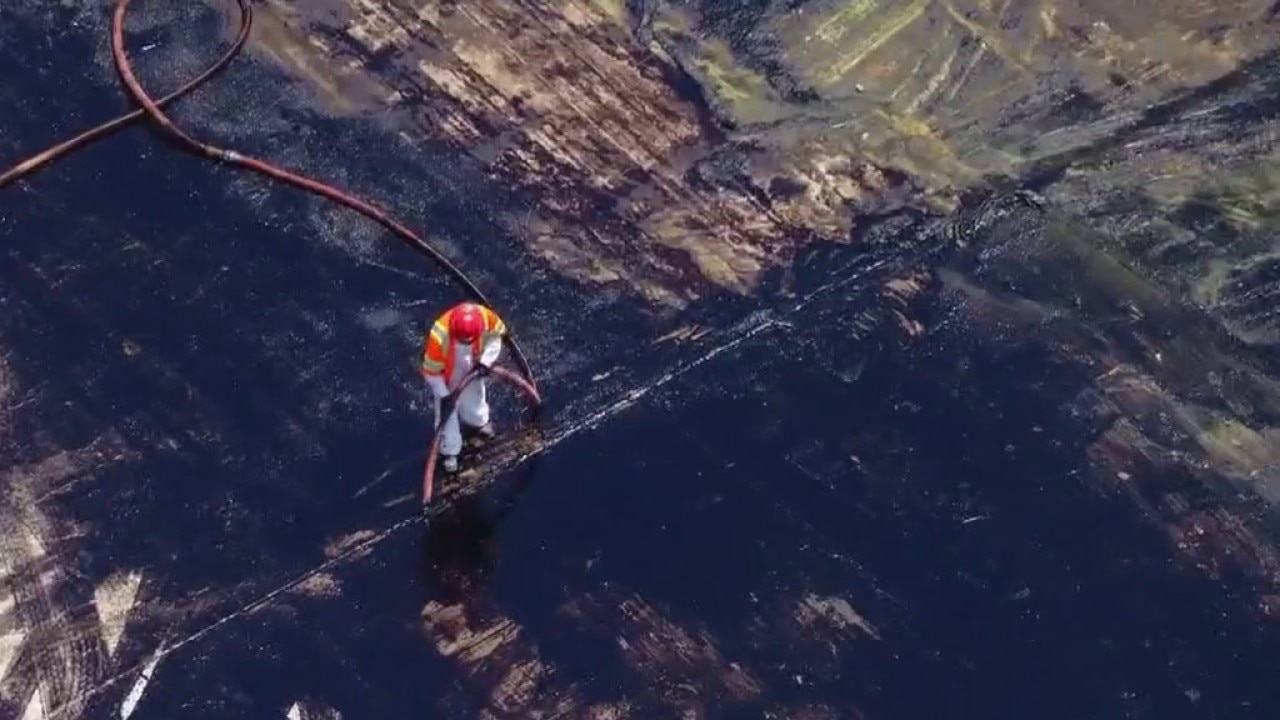
During the work, an underground crude oil pipeline was damaged. The pipeline was described as a 16-inch crude oil transfer line. Once damaged, it released about 25,000 gallons of crude oil into the area.
Some of the oil entered storm drains leading to the Los Angeles River. That detail is significant because storm drains can move pollution quickly from streets or work sites into waterways. Once oil enters a drainage system, cleanup becomes more complicated and environmental risks can spread beyond the immediate spill location.
The spill also created strong petroleum odors in the surrounding community. Residents reported smells, and one complaint came from Esteban E. Torres High School. Air-quality inspectors later confirmed the odors at the school and traced them to the spill site.
This is why the case falls under air-quality enforcement as well as environmental cleanup. Oil spills are not only water and soil contamination events. They can also create air-quality problems when petroleum odors and volatile compounds affect nearby homes, schools and businesses.
Why Air-Quality Regulators Got Involved
South Coast AQMD became involved because the incident affected air quality in nearby communities.
The agency responds to complaints involving odors, dust, smoke and other air-quality concerns. In this case, it received public complaints reporting strong petroleum odors after the spill. Inspectors confirmed the odor issue and linked it to the oil spill site.
The notices of violation were issued under public nuisance provisions. These rules are designed to protect communities from emissions or odors that cause harm, discomfort, nuisance or annoyance to a significant number of people.
This type of enforcement is important because residents do not need to be standing inside the spill zone to be affected. Petroleum odors can travel through the air and affect schools, homes and businesses nearby.
The involvement of a school also made the issue more urgent. When odors reach a campus, regulators must consider how students, teachers and staff may be affected during normal daily activities.
The Public Nuisance Issue
A public nuisance violation does not always mean the same thing as a toxic release finding. It focuses on whether emissions or odors affected the public in a way that violates air-quality rules.
In this case, regulators said the odors were strong enough to trigger complaints and were confirmed by inspectors. The agency then issued notices to the companies connected to the work.
Public nuisance rules are important because communities often experience pollution first through smell. A strong petroleum odor can create fear, discomfort and disruption even before the full environmental impact is known.
Residents may wonder whether the air is safe, whether children should remain indoors, whether businesses should close or whether cleanup activity is creating additional exposure. That uncertainty can create real community stress.
The notices of violation acknowledge that the odor impact was serious enough to warrant enforcement review.
What Notices of Violation Mean
A notice of violation is an enforcement action. It means regulators believe a company may have violated air-quality rules.
It is not the same as a final court judgment, but it can lead to penalties or further legal action. Companies may resolve the matter through settlement, compliance steps or corrective action. If no settlement is reached, regulators may pursue civil penalties through legal channels.
The notices also put companies on formal notice that regulators have identified a problem requiring attention. This can pressure the companies to cooperate with cleanup, reduce emissions, review procedures and prevent future violations.
For the public, the notices provide an official record that regulators investigated the odor complaints and found enough basis to act.
Impact on Residents and the Community
The East LA oil spill affected residents who reported petroleum odors in the area. Odor complaints are not minor in a dense urban community because people may not know whether the smell is temporary, dangerous or linked to a larger environmental issue.
Residents near industrial corridors, pipelines, freeways and construction zones often face overlapping pollution risks. When a spill occurs, it can add to long-standing concerns about environmental burden in working-class and heavily developed communities.
The spill also affected public confidence. People expect construction companies and project managers to know where underground pipelines are located before drilling. When a pipeline is damaged, residents may question whether enough precautions were taken.
The incident therefore raises both immediate and long-term concerns: cleanup today, accountability tomorrow and stronger safeguards before future work begins.
Impact on Esteban E. Torres High School
One of the most important details in the case is that odor complaints included Esteban E. Torres High School.
Inspectors confirmed petroleum odors at the school and traced them to the spill site. This matters because schools are sensitive locations. Students and staff cannot easily avoid exposure during the school day, and parents expect rapid communication when environmental concerns arise near a campus.
The presence of odors at a school can disrupt learning, create anxiety and require coordination among school officials, health agencies and environmental regulators.
Even if cleanup crews respond quickly, schools need clear information about what happened, what was detected and what steps are being taken to protect students and staff.
The citation of the companies connected to the spill shows regulators treated the school-related complaint as part of the enforcement record.
Environmental Concerns Around the Los Angeles River
The spill’s connection to storm drains leading to the Los Angeles River adds another environmental concern.
The Los Angeles River has long been a focus of restoration, flood-control, habitat and community access efforts. Any oil entering drains linked to the river creates potential risks for water quality, wildlife and cleanup operations.
Oil spills can affect birds, fish, vegetation and urban waterways. Even when much of the oil is contained or recovered, residue can remain in hard-to-reach places such as drains, channels, sediment or debris.
The environmental impact depends on how much oil reached the river system, how quickly cleanup crews responded and how effectively contaminated material was removed.
The spill also shows how connected urban infrastructure is. A construction mistake at one street location can affect waterways beyond the immediate site.
Why Underground Utility Work Carries Risk
The incident highlights the risks involved in drilling or boring for underground utilities.
Cities contain dense networks of pipelines, water lines, gas lines, electrical conduits, telecommunications infrastructure and storm drains. Before drilling, contractors must identify and avoid existing underground assets. Failure to do so can lead to serious accidents.
Fiber optic expansion is important for communications infrastructure, but installation work must be carefully coordinated with pipeline and utility maps. Even a relatively small drilling project can create major consequences if it strikes the wrong underground line.
This case shows why planning, verification and oversight matter. Contractors and project managers must treat underground work as high-risk when pipelines or other sensitive infrastructure may be nearby.
Accountability Questions
The citations raise accountability questions for all companies involved.
For Camarillo Drilling, the key question is how drilling operations were conducted and whether proper precautions were followed.
For Arcadian Infracom, the question is how project oversight was handled and whether risks were properly managed before drilling began.
For HP Communications, the question is how the fiber optic installation project was planned, contracted and supervised.
The regulatory notices do not answer every question, but they identify the companies regulators believe are connected to the violations. Further investigation may determine whether additional enforcement, penalties or corrective measures are required.
Accountability matters because communities need assurance that incidents like this will not be treated as routine construction accidents without meaningful follow-up.
Business and Cleanup Claims
Local businesses affected by the spill may face financial losses, disruptions, cleanup costs or customer impacts.
When an oil spill affects a commercial area, businesses may lose foot traffic, face odor complaints, need cleaning support or experience temporary interruptions. Even after the visible spill is addressed, reputational and operational effects can remain.
Officials have indicated that affected businesses may seek assistance or compensation through claims channels connected to the pipeline owner or claims administrators. This process is separate from air-quality enforcement, but both are part of the wider response.
For businesses, documentation is important. Owners should keep records of losses, cleanup expenses, communications, photographs and any official notices connected to the incident.
What Residents Can Do After Odor Incidents
Residents affected by odors, smoke, dust or air-quality concerns can report complaints to South Coast AQMD.
Reporting matters because complaints help regulators identify patterns, respond quickly and document community impact. A single complaint may not always trigger major enforcement, but multiple complaints can show that an incident is affecting a broader area.
Residents should record the date, time, location, odor description and any symptoms or disruptions. They should also note whether the odor affects a school, home, business or public facility.
In incidents involving spills, residents should also follow instructions from local public health and emergency agencies. Air-quality regulators can investigate odors, but public health agencies may provide guidance on exposure concerns, cleanup safety and community precautions.
Why the Case Matters Beyond East Los Angeles
The East LA oil spill is a local incident, but its lessons apply across many urban areas.
Cities are constantly installing, repairing and upgrading underground infrastructure. Fiber optic lines, utility upgrades and public works projects often happen near older pipelines and complex buried systems.
As infrastructure work increases, the risk of accidental strikes also rises unless planning and coordination improve. This is especially important in older urban neighborhoods where infrastructure maps may be complicated or incomplete.
The case also shows how environmental incidents can affect disadvantaged communities. East Los Angeles residents already live near major roads, industrial activity and dense infrastructure. A crude oil spill adds another burden to a community that may already face environmental stress.
That is why enforcement and prevention are both important. Cleanup deals with the current harm. Stronger oversight helps reduce future risk.
What Happens Next
The investigation remains ongoing, and the notices of violation could lead to civil penalties.
The companies may take voluntary action, negotiate settlements or face further enforcement if regulators determine that violations were not resolved. Additional agencies may also continue reviewing environmental cleanup, pipeline safety and potential claims.
Residents and businesses will be watching for several things: the full cleanup status, any penalties assessed, whether companies accept responsibility, and whether regulators require changes to prevent similar incidents.
The public will also want clarity on how the pipeline was struck during drilling and whether existing safety procedures were followed.
Until the investigation is fully resolved, the East LA oil spill will remain a case study in construction risk, environmental enforcement and community impact.
Conclusion
The East LA oil spill has led Southern California air-quality regulators to cite three companies after petroleum odors affected nearby communities and a local school.
South Coast AQMD issued notices of violation to Arcadian Infracom, HP Communications and Camarillo Drilling after a May 22 drilling incident damaged a 16-inch crude oil pipeline near East Cesar Chavez Avenue and Eastern Avenue. About 25,000 gallons of crude oil were released, with some entering storm drains leading to the Los Angeles River.
The violations focus on public nuisance concerns linked to strong petroleum odors. Inspectors confirmed odors at Esteban E. Torres High School and traced them to the spill site.
The case now raises major questions about construction oversight, underground utility safety, environmental cleanup and accountability. Notices of violation can lead to civil penalties, and the investigation remains ongoing.
For East Los Angeles residents, the issue is not only about one spill. It is about ensuring that companies working in dense communities take every necessary step to protect public health, local businesses and the environment before drilling begins.
Read Also: Portugal vs DR Congo Live Kickoff Coverage