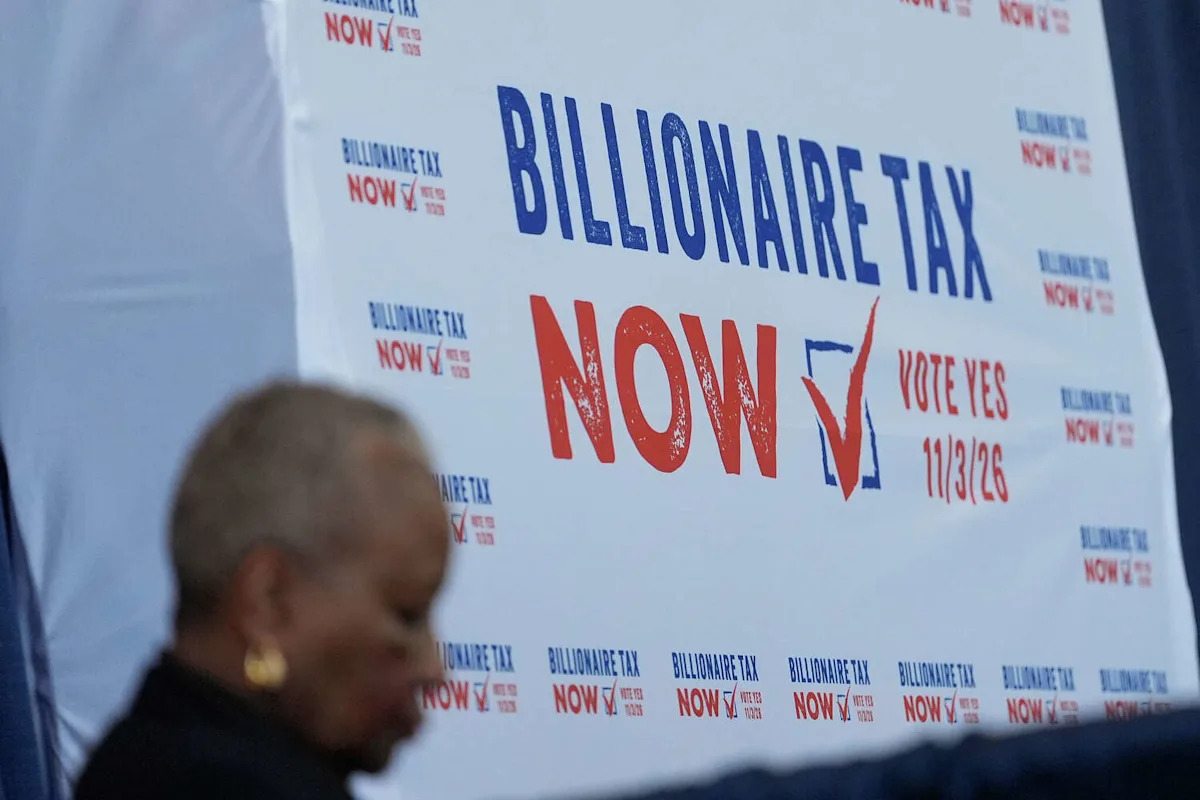
California billionaire tax debate is moving into a new phase after state election officials said a proposed measure to tax ultrawealthy residents became eligible for the November 2026 ballot.
The measure would impose a one-time tax of up to 5% on individuals and certain trusts with covered assets worth more than $1 billion. Supporters say the proposal could raise major revenue for healthcare, education and food assistance. Opponents, including Governor Gavin Newsom, warn that it could drive wealthy residents out of California and weaken the state’s long-term tax base.
The initiative is now set to become one of the most closely watched state ballot fights in the country. California is home to some of the world’s richest people, including technology founders, investors, entertainment executives and entrepreneurs whose wealth is often held in company stock, private businesses and investment assets.
Unlike a traditional income tax, the proposal targets accumulated wealth. That makes it politically powerful but technically complex. It raises major questions about how wealth should be valued, whether billionaires could relocate to avoid the tax, how much money the state would actually collect and whether the measure would survive legal challenges.
For voters, the issue is simple on the surface: should billionaires pay a one-time tax to support public services? For policymakers, investors and tax experts, the answer is far more complicated.
What the California Billionaire Tax Would Do
The proposed California billionaire tax would apply to people whose net worth exceeds $1 billion. The tax would be one-time rather than annual, with a rate of up to 5%.
The measure is designed to tax covered assets, including businesses, securities, art, collectibles and intellectual property. It excludes real property and some retirement accounts, which means the measure does not work exactly like a property tax or ordinary income tax.
Supporters argue that billionaires often hold wealth in assets that can grow dramatically without being taxed in the same way as wages. They say the proposal would make the tax system fairer by asking the richest Californians to contribute more toward public needs.
The measure is backed by SEIU-United Healthcare Workers West and has been linked to efforts to protect healthcare funding, education and food assistance programs. Supporters estimate it could raise tens of billions of dollars, with some campaign materials and reports placing the figure near $100 billion over several years.
However, estimates remain uncertain because wealth taxes are difficult to forecast. The final revenue would depend on asset values, taxpayer behavior, legal outcomes, market conditions and whether affected billionaires stay in California.
Why the Measure Is Politically Explosive
The California billionaire tax is politically explosive because it combines three emotional issues: extreme wealth, public service funding and fear of economic flight.
Supporters frame the measure as a fairness issue. They argue that California has enormous wealth alongside serious public needs, including healthcare gaps, education funding pressure, housing stress and food insecurity. To them, a one-time tax on billionaires is a reasonable way to raise revenue without placing the burden on working families.
Opponents frame the measure as an economic risk. They argue that billionaires are mobile and can move their legal residence, investments or business activity out of the state. If that happens, California could lose future income tax revenue, business investment and charitable giving.
That concern carries weight because California already depends heavily on high-income taxpayers for state revenue. When wealthy residents earn less, sell fewer assets or leave the state, budget volatility can rise.
Governor Newsom’s opposition matters because he is a leading Democratic figure in a state where many progressive tax ideas normally receive serious attention. His position shows that even within Democratic politics, the billionaire tax is far from universally accepted.
Newsom’s Opposition
Governor Gavin Newsom has opposed the billionaire tax proposal, warning that it could harm California’s revenue base by encouraging wealthy residents to leave.
His argument is not that California should avoid taxing the rich altogether. The state already has one of the highest income tax systems in the United States. The concern is that a wealth tax is different from income tax because it targets assets, including unrealized gains and difficult-to-value holdings.
Newsom’s position reflects a broader worry among some California Democrats: the state needs revenue, but it also needs to avoid policies that make its tax base unstable.
If billionaires move before or after the tax is applied, the state may collect less than supporters expect. Opponents also argue that the measure could damage California’s reputation among entrepreneurs and investors, especially in technology and venture capital.
Supporters reject that argument, saying billionaires have benefited enormously from California’s economy, infrastructure, universities, workforce and innovation ecosystem. They argue that a one-time contribution is reasonable given the scale of public need.
Who Would Be Affected
The measure would affect a very small group of people: individuals with net worth above $1 billion and certain trusts with covered assets above the threshold.
That means ordinary taxpayers, homeowners, small business owners and high-income professionals below the billionaire level would not be directly taxed by the proposal.
However, the indirect effects are the real debate. Supporters say the tax would raise money for public programs without affecting most residents. Opponents say the indirect effects could include capital flight, business relocation, legal disputes and reduced future tax receipts.
California has a large number of billionaires, especially in technology, finance, entertainment, real estate-linked industries and private investment. Many of these individuals hold wealth in assets that can fluctuate sharply with market conditions.
That makes timing important. A person’s net worth may rise or fall depending on stock prices, company valuations and broader financial markets.
How the Money Would Be Used
Supporters of the measure say the revenue would help fund healthcare, education and food assistance programs.
Healthcare is central to the campaign. The union backing the measure has argued that California needs new revenue to protect hospitals, emergency services and healthcare access. Education and food assistance are also part of the proposed spending framework.
This spending argument is politically strong because voters can easily understand the connection between billionaire wealth and public services. The proposal asks a small number of ultrawealthy residents to help fund programs used by millions.
But opponents question whether a one-time tax is the right way to fund ongoing needs. Healthcare and education require stable annual funding. A one-time revenue surge may help temporarily, but it may not solve long-term budget problems unless the money is carefully managed.
That question could become a major theme in the campaign: is this a smart way to raise money, or a short-term fix with long-term risks?
Legal and Administrative Challenges
The California billionaire tax would likely face legal and administrative challenges if voters approve it.
One major issue is valuation. Publicly traded stocks are relatively easy to value. Private companies, art collections, intellectual property, venture investments and complex trusts are much harder. Disputes over valuation could lead to audits, litigation and delays.
Another issue is residency. Wealthy taxpayers may argue about whether they were California residents at the relevant date. Residency disputes are already common in state tax law, and a billionaire wealth tax would make them even more high-stakes.
A third issue is constitutionality. Wealth taxes are legally complex, and opponents may challenge the measure in court. The outcome would depend on the final language, state constitutional rules, federal issues and judicial interpretation.
These challenges do not mean the measure cannot work. They mean implementation would be difficult and likely expensive.
Why Wealth Taxes Are Different From Income Taxes
Income taxes apply to money earned during a year. Wealth taxes apply to the value of assets a person owns.
That difference is important. A billionaire may have enormous wealth on paper but not have the same amount in cash. Much of the wealth may be tied up in company shares, private businesses or long-term investments.
A one-time wealth tax could require some affected taxpayers to sell assets or borrow money to pay the tax. Supporters say that is reasonable for people with extreme wealth. Opponents say it could force asset sales, distort investment decisions and create legal fights over valuation.
California already taxes high incomes heavily, especially capital gains when assets are sold. The billionaire tax would go further by taxing wealth even if assets have not been sold.
That is why the measure is being watched nationally. If California voters approve it and it survives legal challenges, other states may consider similar proposals.
Why Tech Billionaires Are Paying Attention
California’s technology sector is central to the billionaire tax debate.
Many of the state’s billionaires built their fortunes through technology companies, venture capital, startups and equity markets. Their wealth is often concentrated in shares of public or private companies.
That makes them especially exposed to a wealth tax. A founder with most of their net worth tied to company stock could face a major tax bill even if they have not sold shares.
Opposition campaigns funded by wealthy individuals and business interests are expected to argue that the measure would damage California’s innovation economy. They may say it would push founders, investors and startups to states with lower taxes.
Supporters will likely respond that California’s innovation economy depends on public investment too: universities, roads, courts, workforce training, healthcare systems and public infrastructure. Their argument is that those who benefited most should help sustain the system.
Union Strategy and Possible Compromise
The measure’s main union backer has reportedly signaled openness to scaling back the proposal, including discussion of a lower 2% version if lawmakers and the governor agree to an alternative.
That creates a strategic question: will the measure definitely go before voters, or is it also being used as leverage in budget and healthcare negotiations?
Ballot measures often function this way in California politics. Groups qualify an initiative, then negotiate with lawmakers before the final deadline. Sometimes measures are withdrawn after a compromise. Sometimes they proceed to a full statewide campaign.
The billionaire tax could follow either path. If it stays on the ballot, California could see one of the most expensive tax campaigns in state history. If it is withdrawn, the debate may shift to a legislative revenue package or a narrower healthcare funding deal.
Supporters’ Argument
Supporters say the California billionaire tax is a fair response to extreme wealth concentration.
They argue that billionaires have gained extraordinary wealth while many Californians struggle with healthcare costs, school funding, food insecurity and housing pressures. They say a one-time 5% tax on wealth above $1 billion would affect only the richest residents while helping fund services for millions.
They also argue that the measure is targeted. It does not raise income taxes on workers. It does not tax ordinary homeowners. It does not apply to millionaires below the billionaire threshold.
For supporters, the campaign message is likely to be direct: California can either protect billionaires from a one-time tax or protect public services used by ordinary residents.
Opponents’ Argument
Opponents say the California billionaire tax is risky, unstable and likely to backfire.
They argue that billionaires can move, restructure assets or challenge the tax in court. If enough wealthy taxpayers leave, the state could lose future income tax revenue and business activity. Opponents also say the measure may be difficult to administer because valuing private assets is complex.
Some critics also argue that one-time taxes are poor tools for funding ongoing programs. Healthcare, education and food assistance require predictable revenue. A one-time wealth tax may create temporary funding but not a sustainable budget solution.
Business groups and wealthy opponents are likely to frame the measure as an attack on California’s innovation economy. They may argue that the state already has high taxes and should not add a new layer of uncertainty.
What Voters Will Decide
If the measure remains on the November ballot, voters will decide whether California should impose a one-time tax on billionaires’ wealth.
The campaign will likely focus on fairness, public services, economic risk and trust in government spending. Supporters will emphasize healthcare, education and food assistance. Opponents will emphasize capital flight, legal uncertainty and possible damage to California’s economy.
The result could have national implications. A victory for the measure would encourage progressives in other states to pursue wealth-tax proposals. A defeat would strengthen arguments that even liberal states are cautious about taxing wealth directly.
California often shapes national policy debates. This measure could do the same for wealth taxation.
Frequently Asked Questions
What is the California billionaire tax?
It is a proposed one-time tax of up to 5% on certain individuals and trusts with covered assets valued above $1 billion.
Is the billionaire tax already law?
No. The measure has become eligible for the November 2026 ballot. It would need voter approval to become law, unless withdrawn before qualification.
Who supports the measure?
The measure is backed by SEIU-United Healthcare Workers West and supporters who argue that billionaires should contribute more to fund public services.
Who opposes the measure?
Opponents include Governor Gavin Newsom and wealthy business figures who argue the tax could drive billionaires out of California and harm long-term revenue.
What would the money fund?
Supporters say the revenue would support healthcare, education and food assistance programs.
Why is the measure controversial?
It is controversial because it taxes accumulated wealth rather than only income. Critics say that could create legal, valuation and residency problems.
Conclusion
The California billionaire tax has become one of the most important ballot fights heading toward November 2026.
The proposal would impose a one-time tax of up to 5% on individuals and certain trusts with more than $1 billion in covered assets. Supporters say the measure would raise major revenue for healthcare, education and food assistance. Opponents, including Governor Gavin Newsom, warn that it could push wealthy residents out of California and weaken the state’s long-term tax base.
The measure is politically powerful because it asks voters a direct question about wealth and public responsibility. But it is also technically difficult because taxing wealth requires asset valuation, residency rules, enforcement systems and likely court battles.
California voters may soon decide whether the state should become the national test case for a billionaire wealth tax. The result could shape not only California’s budget debate, but the future of wealth-tax politics across the United States.
Read Also: Portugal vs DR Congo Live Kickoff Coverage