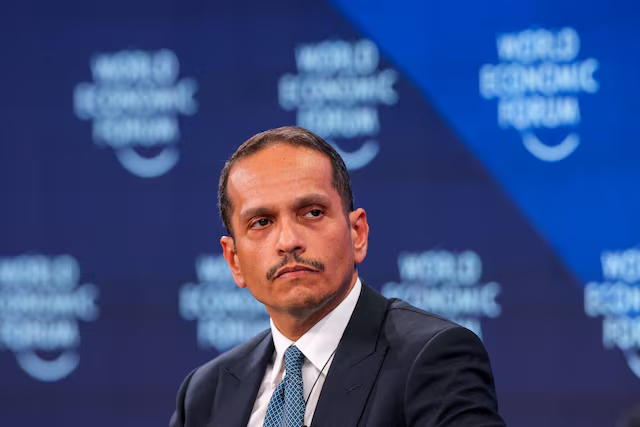
Qatari Prime Minister Sheikh Mohammed bin Abdulrahman al-Thani arrived in Venezuela on Tuesday, state television images showed. The top Qatari diplomat was greeted at his arrival by Venezuelan Foreign Minister Yvan Gil. Neither government has provided a schedule or additional information about the visit’s purpose. The arrival comes during a period of significant transition for Venezuela.
The visit follows last month’s removal of Venezuelan President Nicolas Maduro from power by US forces. This dramatic intervention has reshaped the political landscape in Caracas. International actors are now reassessing their relationships with the country’s new leadership. The Qatari prime minister arrives at a critical juncture for Venezuelan diplomacy.
Qatar’s Historical Mediation Role
Qatar has long served as an intermediary between the United States and Venezuela. The Gulf state has maintained communication channels with both sides for years. This positioning has allowed Qatar to facilitate discussions during periods of tension. Qatari mediators have also aided negotiations between the Venezuelan government and opposition factions.
The country’s ability to maintain relationships across political divides gives it unique diplomatic access. Qatar hosts one of the largest US military bases in the Middle East. Simultaneously, it has maintained working relationships with governments Washington opposes. This balancing act enables Qatar to serve as a trusted go-between in sensitive situations.
Timing and Regional Context
The Qatari prime minister arrives in Venezuela just weeks after the US intervention. The rapid change in Caracas creates both opportunities and challenges for international partners. Countries seeking influence in post-Maduro Venezuela must move quickly to establish relationships. Qatar’s long-standing mediation role positions it favorably for this transition.
The visit also occurs amid broader shifts in Latin American geopolitics. Guyana’s energy conference has drawn attention to regional resource competition. Venezuela’s vast oil reserves remain a significant prize for international investors. Qatar, as a major energy producer itself, has natural interests in the region’s hydrocarbon sector.
Diplomatic Signals and Speculation
The lack of official information about the visit’s agenda has sparked speculation among analysts. Some observers suggest the Qatari delegation is assessing the new political landscape. Others believe economic discussions regarding energy cooperation may be underway. The visit could also involve humanitarian discussions given Venezuela’s ongoing economic challenges.
Foreign Minister Yvan Gil’s personal greeting at the airport signals the importance Venezuela places on the visit. High-level receptions for arriving dignitaries indicate diplomatic priority. The Venezuelan government clearly values its relationship with Qatar. This warmth may reflect expectations of Qatari assistance during the transition period.
Previous Qatari Engagement
Qatar has maintained engagement with Venezuela through various political phases. Previous Qatari officials have visited Caracas during both the Maduro era and earlier administrations. These consistent relationships have built trust across Venezuela’s political spectrum. Qatari mediators have worked behind the scenes during past negotiation attempts between government and opposition.
The Gulf state has also participated in international efforts to address Venezuela’s humanitarian situation. Food and medical assistance programs have involved Qatari contributions. This humanitarian engagement provides additional channels for diplomatic communication. It also builds goodwill among Venezuelan communities affected by economic hardship.
Implications for US Relations
The Qatari prime minister arrives in Venezuela at a time of renewed US focus on the country. President Donald Trump has called for substantial investment to reactivate Venezuela’s oil sector. The $100 billion target reflects serious US interest in Venezuelan resources. Qatari engagement with Caracas could complement or complicate these American objectives.
Qatar’s status as a major non-NATO ally of the United States adds another dimension. Washington trusts Qatari mediation in ways it might not extend to other potential interlocutors. This trust could enable productive discussions about Venezuela’s future that include diverse perspectives. The Qatari role may help bridge gaps between different factions and international partners.
Economic Dimensions of the Visit
Venezuela possesses the world’s largest proven oil reserves. Rehabilitating its devastated energy sector requires massive investment and technical expertise. Qatar, as a leading liquefied natural gas producer, possesses both capital and relevant experience. Discussions about energy sector cooperation would be a logical focus for the visit.
The Venezuelan oil industry has deteriorated dramatically under years of underinvestment and sanctions. Restoring production to previous levels will require billions in new investment. International oil companies are closely watching political developments for opportunities. Qatari engagement could signal confidence in Venezuela’s investment climate.
Regional Diplomatic Dynamics
The Qatari prime minister arrives amid shifting alliances across the Middle East and Latin America. Gulf states have increasingly sought economic and diplomatic partners in Latin America. This trend reflects diversification away from traditional Western-focused relationships. Brazil, Argentina, and Guyana have all received increased Gulf attention recently.
Qatar’s specific interest in Venezuela may relate to broader competition with Gulf neighbors. Saudi Arabia and the United Arab Emirates have also pursued Latin American engagement. Energy markets create natural connections between major producers. Diplomatic positioning now could yield economic benefits as Venezuelan resources come back online.
Humanitarian Considerations
Years of economic crisis have created profound humanitarian needs in Venezuela. Millions have emigrated, while those remaining face food and medicine shortages. International assistance programs have struggled to meet needs amid political complications. Qatar’s history of humanitarian engagement suggests this could feature in discussions.
The visit provides opportunity to assess needs directly and discuss delivery mechanisms. Coordination with Venezuelan authorities and international organizations would be necessary. Humanitarian discussions could proceed even as political negotiations continue separately. This dual-track approach often characterizes Qatari diplomatic engagement in complex situations.
Future Diplomatic Prospects
The Qatari prime minister arrives with potential to open new channels of communication. His discussions with Venezuelan officials will shape future engagement possibilities. The outcomes of this visit may determine whether Qatar plays a formal mediation role going forward. Successful diplomacy could enhance Qatar’s international standing significantly.
Neither government has indicated how long the visit will last. Additional meetings with other Venezuelan political figures remain possible. The opposition’s status following Maduro’s removal creates a changed negotiating environment. Qatar must adapt its approach to new realities while maintaining trusted relationships. The coming days will reveal more about the visit’s purpose and outcomes