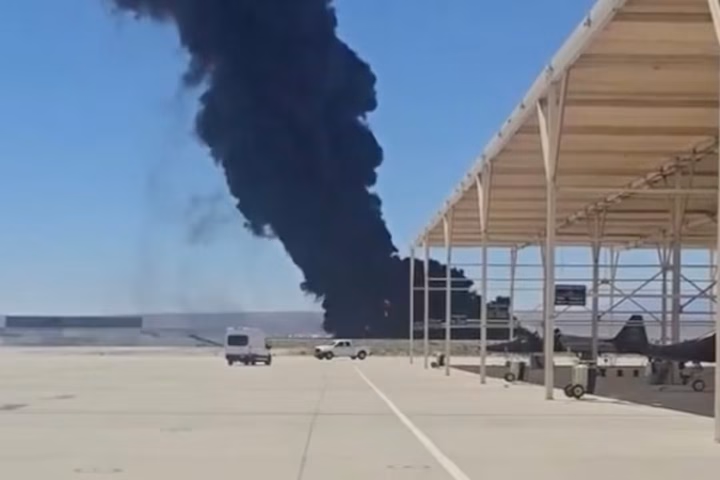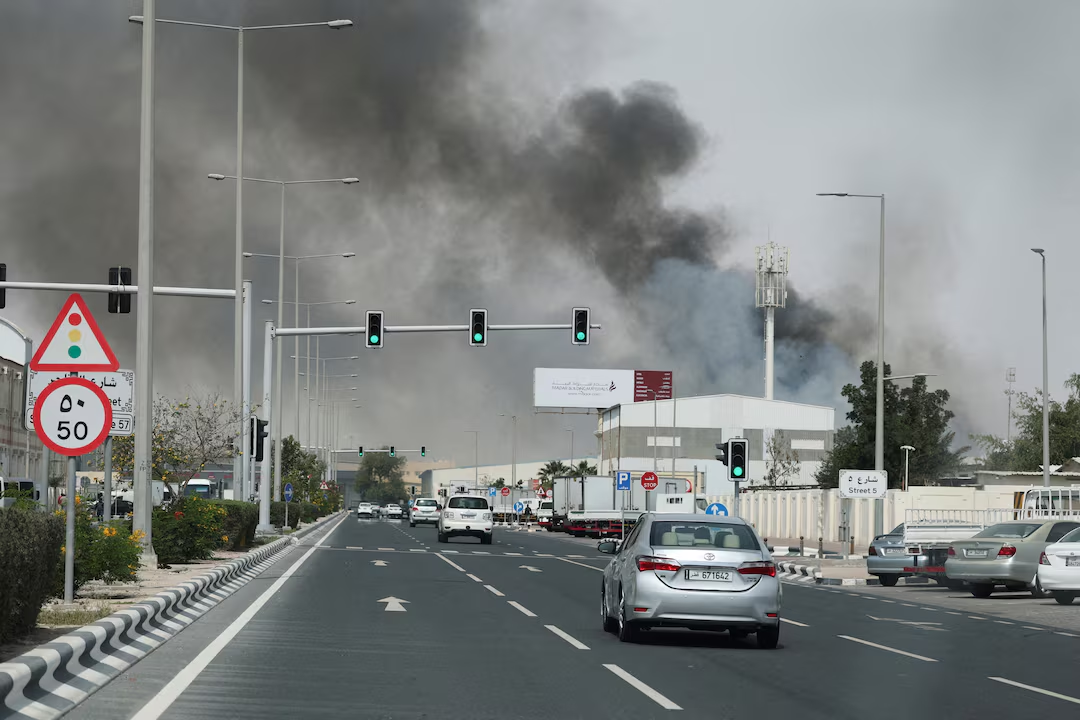
The United States announced Tuesday it has begun facilitating charter flights from multiple Middle Eastern countries. The Iran conflict charter flights aim to assist American citizens stranded by the expanding war. Operations will run from the United Arab Emirates, Saudi Arabia, and Jordan. The State Department will secure additional capacity as security conditions permit. This initiative comes four days after US-Israeli joint military strikes on Iran began. Those strikes severely disrupted regional air travel.
Assistant Secretary for Global Public Affairs Dylan Johnson said the department is also “actively securing military aircraft.” These aircraft would serve Americans wishing to leave the Middle East. Secretary of State Marco Rubio told reporters on Capitol Hill that approximately 1,500 US citizens have requested departure assistance. The department is working to identify charter flights and military options. Officials are also negotiating with airlines to provide larger aircraft with more seats.
Lawmakers Condemn Response Timing
The Iran conflict charter flights represent a significant operational shift. On Monday, the department urged Americans across 14 countries to depart immediately. That guidance recommended using “available commercial transportation.” It offered no government-vouched means for departure. The evacuation effort has drawn sharp criticism from both Democratic and Republican lawmakers. They question the administration’s planning and execution.
Senator Brian Schatz of Hawaii told Reuters that Americans are now “stuck and in danger.” He blamed poor preparation for the current situation. The senator noted that the administration’s stated reason for attacking Iran was expected retaliation. That made the lack of evacuation plans particularly problematic. Former Republican congresswoman Marjorie Taylor Greene expressed outrage on social media. She highlighted the contrast between billions in annual aid to Israel and the US embassy telling Americans they were on their own.
Embassy Guidance Confusion
The US Embassy in Jerusalem initially stated it could not offer assistance. An official later clarified that help was available. The embassy now directs citizens to shuttles operated by the Israeli Ministry of Tourism. These shuttles go to the Taba border crossing with Egypt. The embassy explicitly states Washington cannot guarantee safety on that route. “If you choose to avail yourself of this option to depart, the US government cannot guarantee your safety,” the embassy said.
This cautious language reflects the volatile security situation. The Iran conflict charter flights operate amid escalating violence. Overnight, Iranian drones struck the US embassy in Saudi Arabia. This demonstrates direct threats facing American diplomatic facilities. Major Gulf aviation hubs remained closed for a fourth consecutive day Tuesday. Dubai International Airport, the world’s busiest for international travel, suspended normal operations exceeding 1,000 daily flights. Tens of thousands of passengers remain stranded. Ticket prices have soared.
Wider Regional Impact
The US-Israeli air war against Iran began Saturday. It has sent shock waves through global energy and transportation systems. Crude oil benchmarks rose approximately 6 percent Tuesday. Conflict expansion drove the price increases. President Trump posted on social media overnight about a “virtually unlimited supply” of munitions. He stated that “wars can be fought ‘forever,’ and very successfully.” The administration is pursuing one of the most consequential military actions in recent history. It lacks Senate-confirmed ambassadors across key regional countries including Saudi Arabia, Qatar, Iraq, Egypt, Kuwait, Algeria, and the UAE.
Democratic Senator Andy Kim criticized the administration’s approach on X. He stated that warnings to citizens to evacuate three days into the war when airspace is closed demonstrates “ZERO strategy and planning.” Security alerts for Americans in Kuwait, the UAE, Iraq, Qatar, and Bahrain urged shelter-in-place preparations. These alerts appeared after strikes began, according to embassy social media timestamps. This timing contrasts sharply with weeks of notice provided before the 2003 Iraq invasion.
Personnel Movements Ordered
The State Department also announced Tuesday it has ordered departure of non-emergency US government personnel. This applies to embassies in Bahrain, Qatar, the UAE, Kuwait, and Jordan. Family members must also depart. Similar measures were previously implemented for US missions in Lebanon and Israel. These personnel reductions further strain diplomatic capacity during a critical period. Intensive engagement with host governments on evacuation coordination requires robust staffing.
The Iran conflict charter flights represent a logistical challenge. Closed airspace complicates operations. Reduced commercial capacity limits options. Security threats to aviation create additional risks. Military aircraft options provide more operational flexibility. However, they require overflight permissions. They also raise potential for targeting by Iranian forces. The department must balance evacuation urgency against risks inherent in military transport operations through contested airspace.
Trump Addresses Criticism
President Trump addressed the situation briefly Tuesday in the Oval Office. He told reporters that “it all happened very quickly” when asked why evacuation plans were not in place before strikes began. This explanation may satisfy some supporters. It appears unlikely to mollify lawmakers demanding accountability for stranded Americans. The Iran conflict charter flights announcement demonstrates the administration recognizes the political necessity of visible assistance efforts.
Critics note that predictable Iranian retaliation should have prompted pre-positioned evacuation assets. Clear guidance to citizens in the region should have preceded military action. The delay in organizing government-facilitated departure options suggests intelligence or planning failures. Whether the charter flights initiative can move quickly enough to assist all 1,500 requesting Americans remains uncertain. Security conditions may deteriorate further.
The coming days will test the State Department’s capacity to execute complex evacuation operations under fire. Charter flights from three countries provide initial capacity. Rubio’s reference to military aircraft suggests additional options may soon materialize. For Americans currently stranded in closed airports across the Middle East, the Iran conflict charter flights represent a lifeline. This assistance arrived later than many believe it should have. The political consequences of this delay will likely feature in congressional hearings and oversight actions as the conflict continues.