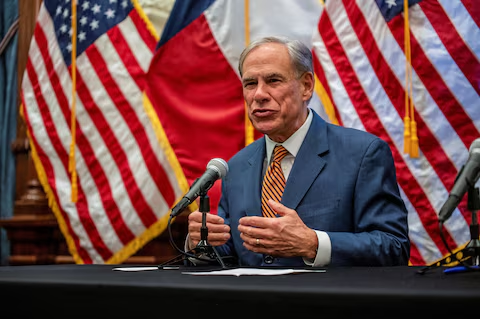
Governor Greg Abbott secured the Texas Republican gubernatorial primary Tuesday, US media projected, advancing toward his fourth consecutive term in office. The Greg Abbott primary win positions the 68-year-old incumbent as the GOP standard-bearer in the general election for the most populous Republican-led state. Abbott, a close ally of President Donald Trump, has dominated Texas politics since his first election as governor in 2014. His campaign focused on the conservative accomplishments achieved during his tenure.
The primary victory was widely expected given Abbott’s name recognition, fundraising advantages, and strong party support. Texas has not elected a Democratic governor since Ann Richards in 1990, making Abbott the heavy favorite for November. The Greg Abbott primary win demonstrates continued Republican confidence in his leadership despite some intra-party tensions over specific policy approaches during his previous terms.
Conservative Record Highlighted
Abbott has pushed an increasingly conservative agenda throughout his governorship, placing Texas at the forefront of numerous national policy debates. The state enacted anti-abortion laws that anticipated the Supreme Court’s eventual overturning of Roe v. Wade. Texas banned so-called “sanctuary cities” in 2017, requiring local law enforcement to cooperate with federal immigration authorities. The state created the nation’s largest school voucher program and loosened gun laws during Abbott’s tenure.
The Greg Abbott primary win validates this conservative approach among Republican primary voters who rewarded his policy achievements. Abbott’s alignment with Trump on immigration, border security, and economic issues further solidified his position with the party base. His campaign messaging emphasized continuity of conservative governance and resistance to federal overreach.
Border Security Focus
Abbott made border security a centerpiece of his primary campaign, highlighting Operation Lone Star initiatives that deployed state law enforcement and National Guard troops to the Mexico border. The program has drawn both praise from conservatives and criticism from civil liberties advocates. Abbott consistently framed border security as both a state responsibility and a rebuke of federal immigration policies.
The Greg Abbott primary win suggests voters support this aggressive approach despite ongoing legal challenges and federal-state tensions. Abbott frequently clashed with the Biden administration over immigration enforcement before Trump’s return to the White House. With Trump now president, Abbott’s border policies align more closely with federal priorities.
Democrats Look Ahead
Democratic primary voters will choose their nominee in a separate contest, with several candidates vying to challenge Abbott in November. Texas Democrats have struggled for decades to break the Republican hold on statewide offices despite demographic changes that many predicted would make the state more competitive. The Greg Abbott primary win ensures the governor enters the general election with unified party support and substantial campaign resources.
Democratic candidates will need to appeal to moderate Republicans and independent voters while mobilizing the party’s base in urban centers. Texas population growth has added millions of new residents since Abbott’s first election, many arriving from other states with different political orientations. Whether these demographic shifts translate into Democratic gains remains an open question.
Policy Legacy
Abbott’s tenure has reshaped Texas governance across multiple domains. His school voucher program redirected education funding toward private school options, fulfilling a long-standing conservative priority. Gun law liberalization removed permitting requirements for concealed carry. Immigration enforcement measures created new state-level apparatus for border control. The Greg Abbott primary win suggests voters approve this policy direction.
Economic development during Abbott’s governorship attracted business relocations from higher-tax states, contributing to Texas population growth. The state added jobs and maintained relatively low unemployment through most of his tenure. Business climate rankings consistently placed Texas near the top nationally, reinforcing Abbott’s pro-growth messaging.
National Significance
As governor of the largest Republican state, Abbott wields significant influence in national conservative politics. His policy experiments in Texas often serve as models for other GOP-led states considering similar measures. The Greg Abbott primary win maintains his platform for shaping Republican policy debates ahead of potential future national ambitions, though Abbott has not indicated interest in higher office.
Abbott’s relationship with Trump has evolved over time, from early primary competition in 2016 to consistent alliance during Trump’s presidency and subsequent campaigns. The governor welcomed Trump’s endorsement and campaigned alongside him during the primary. This alignment helps Abbott with Trump loyalists while potentially creating complications with more moderate general election voters.
General Election Outlook
Abbott enters the general election with substantial advantages including name recognition, fundraising capacity, and Texas’s Republican leaning. Democratic turnout in midterm elections traditionally lags presidential years, potentially benefiting the incumbent. The Greg Abbott primary win clears the path for general election messaging focused on conservative accomplishments rather than intra-party divisions.
Democratic opponents will attempt to make the case that Abbott’s policies have gone too far on abortion restrictions, voting laws, and immigration enforcement. They will target suburban women and moderate Republicans who may find Democratic alternatives appealing. Abbott’s campaign will likely focus on economic performance, border security, and alignment with popular conservative positions.
The primary outcome was never seriously in doubt given Abbott’s political strength and lack of well-funded opponents. His victory speech Tuesday night emphasized unity and preparation for the general election contest. With the Greg Abbott primary win secured, the governor can now focus resources and attention on November while Democrats continue their own nominating process. Texas voters will ultimately decide whether Abbott’s fourth term represents continued conservative governance or an opportunity for Democratic change.