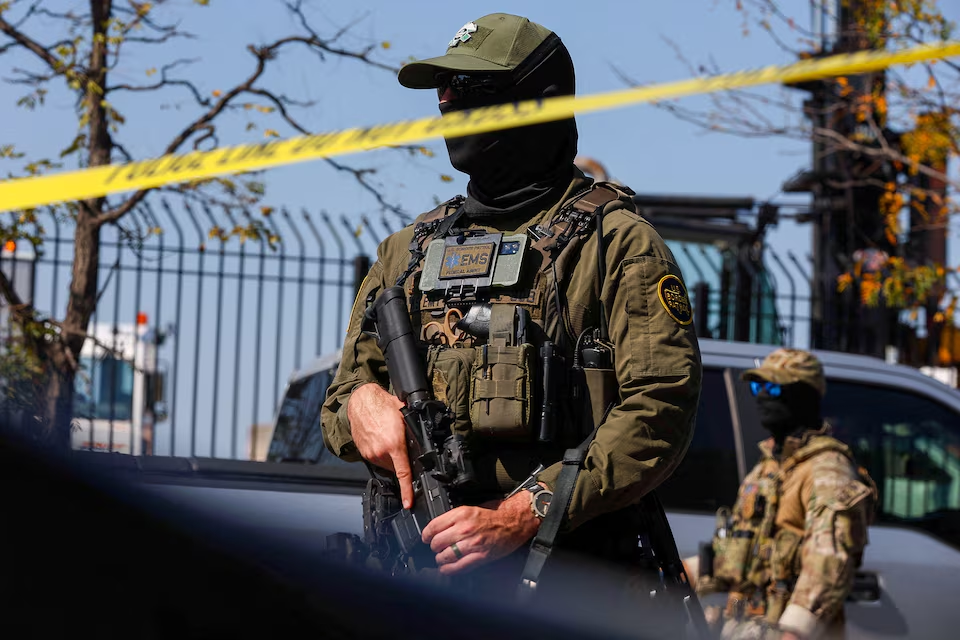
Newly released bodycam footage from a Chicago incident last fall has raised fresh questions about a Border Patrol agent’s use of force against a U.S. citizen. The Chicago shooting video, made public late February 10, 2026, captures moments leading up to the shooting of Marimar Martinez, a 31-year-old Montessori teacher.
Federal prosecutors released the material after a district court judge criticized the government for showing “zero concern” about Martinez’s reputation. The judge ordered the disclosure of video, text messages, emails, and other records.
On October 4, 2025, Martinez followed Border Patrol agents in her vehicle. She aimed to alert neighborhood residents about the agents’ presence during an immigration operation. A collision occurred between her car and the agents’ Chevy Tahoe.
Initial statements from the Department of Homeland Security claimed Martinez “ambushed” the agents by ramming their vehicle. The agency described the shooting as self-defense. However, the Chicago shooting video tells a different story.
In the footage, an agent inside the Tahoe says the team is “boxed in.” He then declares, “It’s time to get aggressive,” followed by “we’re going to make contact.” The driver, Agent Exum, turns the steering wheel sharply left. Contact follows almost immediately.
After the impact, Exum exits with his weapon drawn and fires five shots toward Martinez’s vehicle. She drives away and later receives hospital treatment for multiple wounds.
Conflicting Accounts and Official Response
The DHS statement labeled Martinez a “domestic terrorist” and accused her of an ambush. That description remains online despite the charges against her being dropped in November 2025. Prosecutors had indicted Martinez for impeding a federal officer.
Martinez sought the release of evidence after federal agents fatally shot protesters Renee Good and Alex Pretti in Minneapolis last month. She aims to clear her name and plans a civil lawsuit, according to her attorney Christopher Parente.
The Chicago shooting video undermines the ambush narrative. It shows agents initiating aggressive maneuvers before the collision. An agent can also be heard saying “do something, bitch” shortly before contact.
Additional Evidence Raises Concerns
Court records reveal more troubling details. Exum drove the damaged Tahoe back to his base in Maine. A Customs and Border Protection mechanic repaired it before defense examination could occur.
Text messages from Exum surfaced during proceedings. In a group chat, he bragged about his shooting accuracy. “I fired 5 rounds and she had 7 holes. Put that in your book, boys,” he wrote.
An email from Border Patrol official Gregory Bovino arrived the same afternoon. Bovino, later demoted from his commander-at-large role after the Pretti shooting, praised Exum. He thanked the agent for “excellent service” in Chicago and urged him to delay retirement. “You have much left to do!” Bovino wrote.
Broader Context in Immigration Enforcement
The incident fits into wider immigration crackdowns under the Trump administration. Federal agents have faced criticism for aggressive tactics in sanctuary cities like Chicago and Minneapolis.
Martinez’s case highlights tensions between enforcement operations and community safety. Residents often attempt to monitor or document agent activity, leading to confrontations.
The release of the Chicago shooting video adds pressure on the Department of Homeland Security. It must explain discrepancies between initial statements and recorded evidence.
Public attention has grown since the Minneapolis shootings. Those deaths intensified scrutiny of federal use of force during protests and operations.
Martinez continues to recover from her injuries. Her legal team focuses on accountability and reputational repair. The civil suit could seek damages for excessive force, false statements, and emotional distress.
As more evidence emerges from similar cases, questions persist about training, oversight, and transparency. The Chicago shooting video provides concrete proof that challenges official versions of events.
The footage serves as a key piece in ongoing debates over immigration enforcement tactics. It underscores the need for clear policies that protect both agent safety and civilian rights during high-stress encounters.