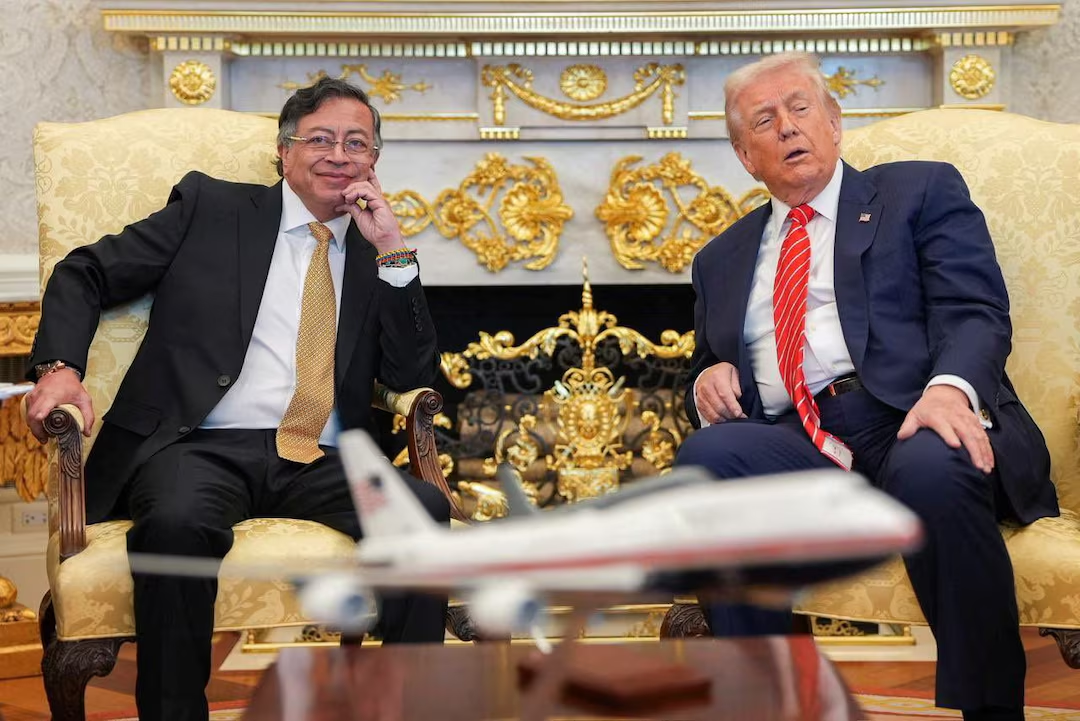
President Donald Trump and Colombian President Gustavo Petro held a surprisingly cordial meeting at the White House, seeking to mend ties after months of public feuding. The two leaders represent radically different ideologies and have traded harsh barbs. However, their first face-to-face encounter defied expectations of further conflict. The private meeting lasted roughly two hours without media present. Afterward, both described the discussion in upbeat terms, focusing on counternarcotics cooperation. This rapprochement follows a positive phone call in January that led to the Washington invitation. Consequently, the Trump Petro meeting signals a potential thaw in a relationship critical for regional security and drug interdiction efforts.
Petro arrived without the typical fanfare for a state visit. Following the talks, he posted a warm note from Trump on social media. The handwritten message read, “Gustavo – A great honor – I love Colombia,” accompanied by a photo of them shaking hands. In a Colombian radio interview, Petro said his prior contradictions seemed more with other U.S. officials than with Trump personally. He stated he asked for U.S. help capturing major drug traffickers living abroad. Additionally, he requested Trump mediate a diplomatic spat with Ecuador, which Trump agreed to do. Trump told reporters, “We got along very well.” He acknowledged they weren’t previously friends but emphasized the positive tone of their discussions.
From Public Feuds to Private Diplomacy
The path to this meeting was fraught with public hostility. In October, Trump called Petro an “illegal drug leader” without evidence. He also mooted military action against Colombia, a longtime ally, accusing it of failing to control narcotics. Conversely, Petro has been a harsh critic. He labeled U.S. strikes on alleged drug boats as war crimes. Furthermore, he described the recent U.S. operation deposing Venezuelan leader Nicolas Maduro as a “kidnapping.” Their ideologies clash sharply: Trump voices desire for American dominance, while Petro is a former anti-imperialist guerrilla. Despite this, the January phone call initiated a unexpected thaw. Trump suggested Petro’s tone changed after the Maduro raid, implying increased acquiescence.
Focus on Counternarcotics and Security Cooperation
The central substantive focus of the Trump Petro meeting was combating drug trafficking. Colombia remains the world’s top producer of coca, the base ingredient for cocaine. Several U.S.-designated terrorist organizations also operate within its borders. Trump told reporters they worked on accords to counter narcotics flows, though no concrete agreement was announced. Petro specifically asked for help capturing high-value traffickers residing outside Colombia. This aligns with U.S. interests in stemming the northward flow of drugs. However, their approaches differ. The Petro administration has moved away from forced coca eradication, emphasizing alternative development and sophisticated interdiction instead. U.S. officials often view forced eradication as critical, creating a policy tension that the meeting did not fully resolve.
The Politics of Flattery and Personal Diplomacy
The encounter highlighted Trump’s preference for personal diplomacy and flattery. Many foreign leaders use praise to navigate relations with him. Petro, despite his critical history, engaged in this dynamic. He effusively complimented Trump’s Oval Office renovations, noting the copious gold leaf. “It was more beautiful this time. I told him he was a good designer,” Petro said. “The design was spectacular.” A photo released by the White House showed a Petro aide holding a pamphlet titled “COLOMBIA: America’s #1 Ally against Narcoterrorists.” This symbolism served to reinforce the cooperative frame. Meanwhile, Petro remains under U.S. sanctions issued by the Trump administration in October for alleged, unproven drug trade links. The sanctions were not mentioned publicly, indicating a deliberate de-escalation for the meeting’s sake.
Regional Implications and Unresolved Tensions
A failed rapprochement could have profoundly damaged regional security. Colombia has been a staunch U.S. ally for decades. Continued hostility would disrupt vital security cooperation. The meeting therefore stabilizes a key partnership, at least temporarily. However, underlying tensions persist. Petro recently urged Colombian migrants to return from the U.S., saying it’s better to live in Havana than in “traffic-clogged” Miami. His government’s shift in drug policy still concerns Washington. Furthermore, Trump’s agreement to mediate with Ecuador’s pro-U.S. president, Daniel Noboa, is a minor diplomatic win for Petro. It demonstrates Trump’s willingness to engage pragmatically. Nonetheless, the long-term durability of this detente is uncertain, as it relies heavily on the personal dynamic between two mercurial leaders.
Path Forward for U.S.-Colombia Relations
The Trump Petro meeting provides a reset opportunity, but concrete follow-up is essential. Working-level talks on sanctions, extradition, and joint operations must now translate the positive tone into action. The U.S. will watch closely for a reduction in coca production figures, which have risen under Petro. Colombia will seek greater respect for its sovereignty and alternative development approaches. Ultimately, the relationship’s future depends on sustaining this fragile personal rapport amid deep policy differences. Both leaders seemed satisfied with managing perceptions and reducing public hostility. This alone is a significant diplomatic achievement given their past rhetoric. However, transforming a cordial photo opportunity into sustained, effective partnership on complex issues like drug trafficking and regional stability remains the formidable challenge ahead. The world will observe whether this thaw leads to lasting cooperation or merely a temporary pause in a tumultuous relationship.