The long-anticipated Metrolink commuter train service to Santa Barbara and Goleta has been scrapped due to prolonged delays, shifting the focus to the Pacific Surfliner as the new provider for expanded train service. The Los Angeles-San Diego-San Luis Obispo Rail Corridor Agency (LOSSAN) made the decision in late 2025 after contract delays and other complications made the Metrolink plan unfeasible.
The original plan, which aimed to bring a morning commuter train from Ventura County, including stops in Moorpark, Camarillo, Oxnard, Ventura, Carpinteria, Santa Barbara, and Goleta, was optimistic. However, delays in contract discussions and complications from Union Pacific’s $85 billion merger with Norfolk Southern Railway stalled the proposal. The required review of the Metrolink plan by Union Pacific wouldn’t be completed until 2026, further delaying the program’s potential launch.
In November 2025, the LOSSAN board of directors voted to pivot from the Metrolink proposal and instead focus on restoring the Pacific Surfliner service. This decision marks the end of hopes for Metrolink’s integration into the region and paves the way for a new plan under the well-established Amtrak Pacific Surfliner.
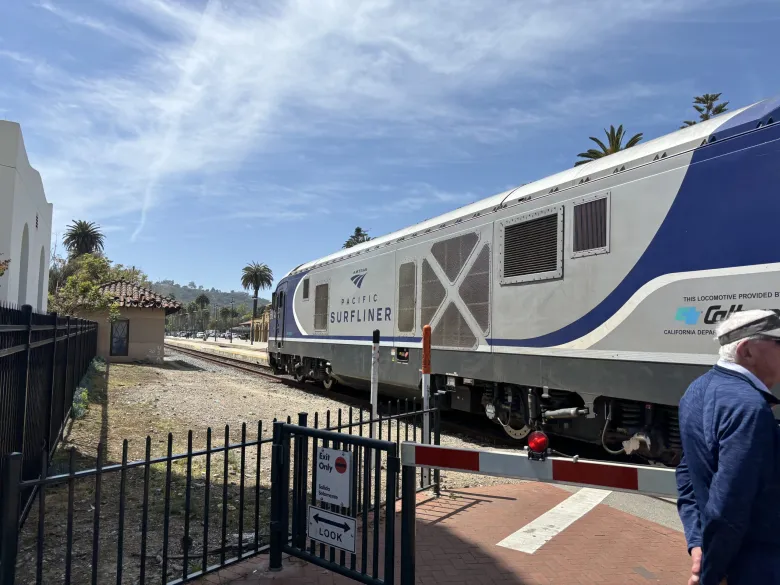
The Pacific Surfliner, which currently operates along the 351-mile LOSSAN Corridor between San Diego, Los Angeles, and San Luis Obispo, will now extend its routes to include Goleta with a new morning train. This service, set to launch as early as April 2026, will offer a direct connection between Los Angeles and San Luis Obispo, with a stop at the Goleta station at 8:11 a.m. The new plan will eliminate the need for Metrolink’s complex startup process, saving costs and simplifying the marketing process with a single operator.
The decision to use the Pacific Surfliner aligns with ongoing efforts to expand transportation options along the South Coast while alleviating traffic congestion on Highway 101. The city and surrounding areas have long sought a commuter train option to reduce the number of drivers coming from Ventura County. Officials remain optimistic that the new Pacific Surfliner service will meet local demand and provide a much-needed alternative to driving.
The transition to the Pacific Surfliner, however, comes with a higher annual operating cost of approximately $2 million. This cost contrasts with the Metrolink proposal, which would have shared the $450,000 startup cost between the Santa Barbara County Association of Governments (SBCAG) and the Ventura County Transportation Commission (VCTC). Despite the cost differences, the Pacific Surfliner’s established route and ridership make it a viable option for the region, according to local transit officials.
The Pacific Surfliner remains the busiest state-supported Amtrak route, serving 2 million passengers annually, and will likely continue to serve as a critical piece of Santa Barbara’s transportation infrastructure in the years to come.